How to Choose a Dune Buggy in Dubai
Dubai’s desert landscape is a natural playground for anyone who enjoys speed, sand, and a bit of adventure. Dune buggies offer a way to explore the rolling red dunes without the noise and weight of a full-sized four-wheel drive. But with several types, rental options, and safety considerations on the market, picking the right buggy for your trip takes a little thought. This guide walks you through the main factors to consider so you can make a confident choice.
Step 1: Decide on a Single-Seater or a Two-Seater
The first fork in the road is how many people you want to carry. Single-seater buggies are lighter, more agile, and generally easier to handle on steep dune faces. They are designed for one driver and nothing else. Two-seater models have a passenger seat beside the driver, which makes them a good pick if you are sharing the experience with a friend or family member who does not want to drive themselves.
Watch out for weight limits. Two-seaters usually have a higher total capacity, but the added weight changes how the buggy handles in soft sand. A heavier buggy can bog down more easily on loose slopes, so if you are a larger person or plan to carry a passenger, look for a model with enough power to compensate. Some rental operators offer a choice of engine sizes, and that can make a real difference to your day.
Step 2: Understand the Engine and Drive System
Most dune buggies in Dubai use a petrol engine, either a standard four-stroke or a more powerful two-stroke. Four-stroke engines are quieter, run cleaner, and need less maintenance. Two-stroke engines give you more punch for their size, but they can be louder and produce more exhaust smell. For a casual day out, a four-stroke is usually the better choice because it is easier to control and less tiring to drive for long stretches.
The drive system matters too. A direct-drive buggy (where the engine is linked straight to the wheels) gives you instant response when you hit the accelerator. That is great for climbing dunes, but it can also make the buggy feel jerky if you are not used to it. Belt-driven systems are smoother and more forgiving, especially for beginners. If you are new to dune buggies, ask the rental provider which system their fleet uses. A belt-driven model will let you learn the feel of the sand without fighting the controls.
Step 3: Check the Seat and Restraint Setup
Comfort might sound like a minor detail, but you will spend anywhere from an hour to half a day in that seat. Look for a buggy with a padded seat that gives you good support across your lower back. The seat should be positioned so your legs are not cramped against the steering wheel or the dashboard. If you are tall, check that you have enough headroom and that the roll bar does not sit too close to your helmet.
Restraints are not optional. A proper four-point harness (like the kind used in go-karts) is far safer than a simple lap belt, because it keeps your upper body from pitching forward during a sudden stop or a tumble. Never settle for a buggy with a worn or missing harness. If the webbing looks frayed or the buckle does not click shut firmly, ask for a different buggy. Your safety depends on it.
Step 4: Look at the Tyres and Suspension
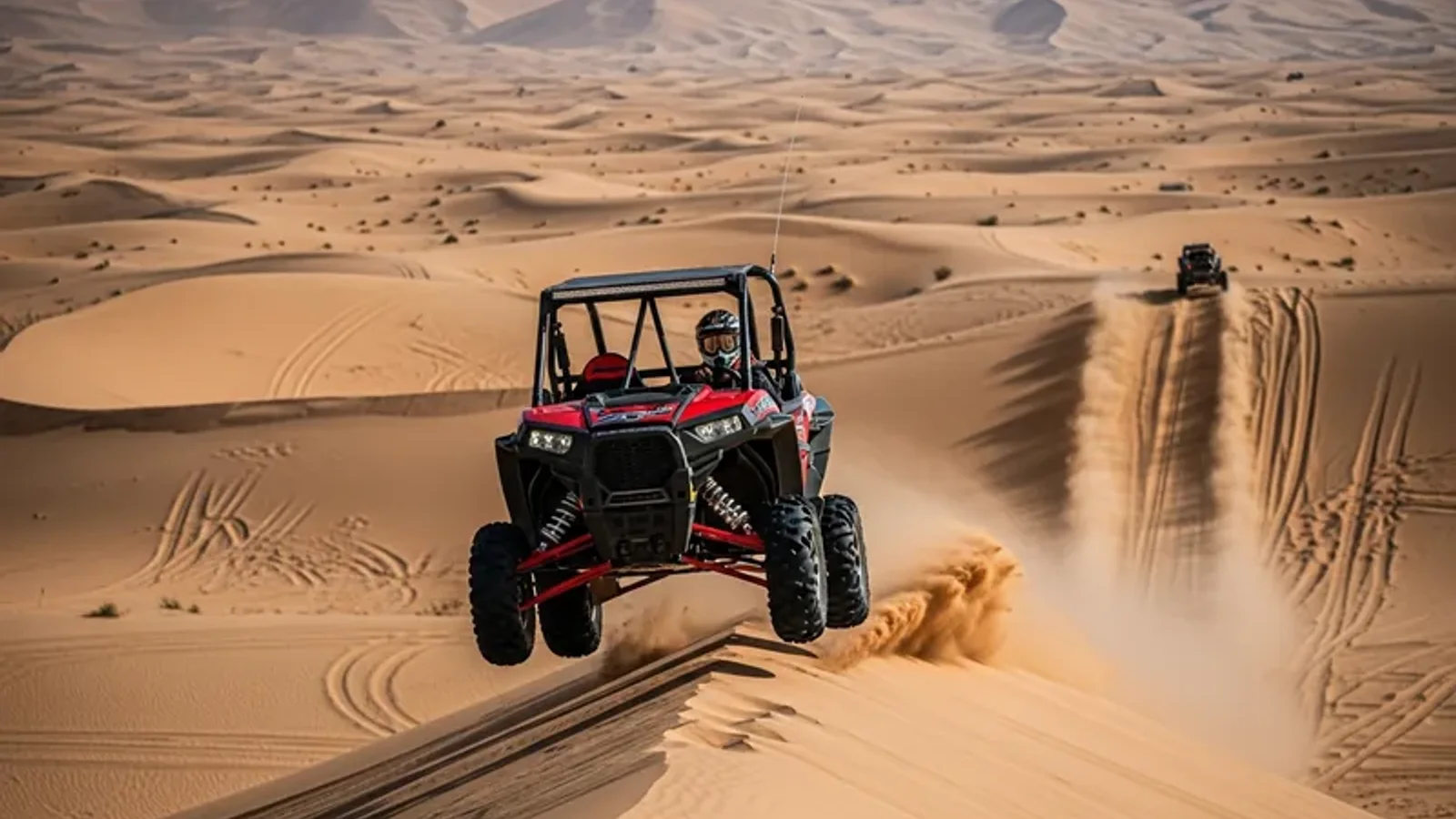
Sand tyres are different from road tyres. They have a wider footprint and a deeper tread pattern designed to grip loose material rather than tarmac. A buggy with standard all-terrain tyres will struggle in deep dune sand, because the tread fills up and the tyre loses traction. Ask the operator whether their buggies are fitted with dedicated sand tyres or with a hybrid pattern. If you are planning to ride on soft, powdery dunes, sand tyres are essential.
Suspension is another make-or-break feature. The desert floor is not a smooth racetrack. It is full of dips, ridges, and hidden rocks. A buggy with long-travel suspension (usually around six to eight inches of travel at each corner) will soak up those bumps and keep the wheels on the ground. Short-travel suspension works fine on hard-packed gravel, but on dunes it will bounce you around and make the ride exhausting. If the buggy has adjustable suspension, ask the operator to set it for the terrain you plan to cover. A softer setting works better for sand because it lets the tyres conform to the dune shape.
Step 5: Evaluate the Rental Provider’s Reputation
Even the best buggy is only as good as the company that maintains it. A well-maintained machine will start easily, handle predictably, and not leave you stranded in the desert. A poorly maintained one can ruin your day or, worse, create a dangerous situation. Look for a provider that is transparent about their fleet age and service schedule. If they cannot tell you when the buggy was last serviced, that is a red flag.
One way to get a sense of reliability is to check the Classic Desert Safari official site. It gives you a look at the kind of vehicles they operate and the conditions they keep them in. A provider that invests in good equipment and regular maintenance tends to show that off on their website. If the photos and descriptions look generic or inconsistent, treat that as a warning sign.
Step 6: Consider the Tour or Rental Package
Some people want to rent a buggy for a few hours and explore on their own. Others prefer a guided tour where a lead driver takes a small group through a set route. Each has its pros and cons. A self-drive rental gives you freedom to go at your own pace and stop where you like. But it also means you need to know the area, carry your own water and recovery gear, and be prepared for the possibility of getting stuck.
A guided tour takes the navigation worry away. The lead driver knows the dunes, the safe lines, and the spots where the sand is too soft. They can also offer tips on technique as you go. If you are new to dune buggies, a guided tour is usually the smarter choice. You learn faster and you have someone to help if things go wrong. The Classic Desert Safari official site lists tours that suit different experience levels, so you can match the package to your comfort zone.
Step 7: Check the Safety Briefing and Gear
A proper rental provider will give you a safety briefing before you get in the buggy. That briefing should cover how to start and stop the vehicle, how to shift your weight on a steep slope, what to do if you tip over, and how to signal for help. If the operator just hands you the keys and points at the dunes, walk away. A good briefing is a sign that the company takes safety seriously.
You should also be offered a helmet and goggles. Even on a short ride, sand and dust get everywhere, and a flying pebble can hit your face at speed. If the operator does not provide these items, or if the ones they offer are scratched and dirty, that is another red flag. Bring your own goggles if you have them, because a clean lens makes a huge difference to your visibility and confidence on the dunes.
Step 8: Read the Fine Print on Damage and Insurance
Dune buggies can get damaged. A roll, a collision with a rock, or even a high-speed slide can break parts. Before you sign any rental agreement, read what happens if you cause damage. Some operators charge a flat deposit and then deduct repair costs from it. Others have a damage waiver that caps your liability. Make sure you understand the numbers before you take the wheel.
If the operator offers insurance, ask what it covers. Does it include damage to the buggy, or only third-party liability? Does it apply in the dunes, or only on the way there? A clear policy protects both you and the rental company. If the operator is vague about the terms, consider looking for another provider. A transparent policy is a mark of a professional operation.
Final Practical Checks Before You Go
Once you have chosen a buggy and a provider, do a quick walk-around before you drive off. Check the tyre pressure (soft sand needs lower pressure than hard ground). Make sure the fuel cap is tight and there are no leaks. Test the steering and brakes while the buggy is stationary. If something feels wrong, speak up. It is easier to swap buggies at the base than to deal with a problem halfway up a dune.
Take water, a charged phone, and a basic map of the area. Even on a guided tour, having your own supplies gives you peace of mind. Dress in layers: the desert can be hot in the sun and cool once the wind picks up. And remember to have fun. A dune buggy is a tool for adventure, and the right choice makes all the difference between a bumpy ride and a memorable one.
Classic Desert Safari on social media
 Twitter
 Facebook
 Instagram
 YouTube
 Pinterest